Visalia, CA · Garage Door Service
When the Power Drops, Your Opener in Visalia Is the Weak Link
Visalia homes built mostly 1965-2003 run older openers with no battery backup. Here's why summer heat cuts here hit those units harder, and what to check first.
- Repairs & new doors
- Springs & openers
- Serving 5 nearby communities
The Situation
Across the Visalia service area, the housing stock mostly went up between 1965 and 2003, with the typical house dating to around 1980. That's true in Patterson Tract four miles out, in Goshen five miles out, and across most of the 18 named communities this company covers. A house from that window almost never came with a smart opener or a battery backup - those weren't standard features until well after this area's homes were already built. So when the power drops, the opener just stops. No chime, no backup light, nothing. You're standing in the driveway with a door that won't move and a circuit board old enough that nobody stocks parts for it anymore.
This isn't a minor inconvenience. With 57,789 households and 26,726 owner-occupied houses in this service area, a lot of garages are sitting on openers from that same era, and a lot of those openers are running on borrowed time even before a power outage factors in. The outage just exposes a weakness that was already there.
Where People Go Wrong
The most common mistake is assuming a dead opener after a power outage means a dead motor. Usually it doesn't. The motor's fine - it's the control board or the backup system (or lack of one) that's the problem. People spend money on a service call for a 'broken opener' when the real issue is that the unit simply has no way to run without grid power, which is normal for anything installed in that 1980s-90s stretch.
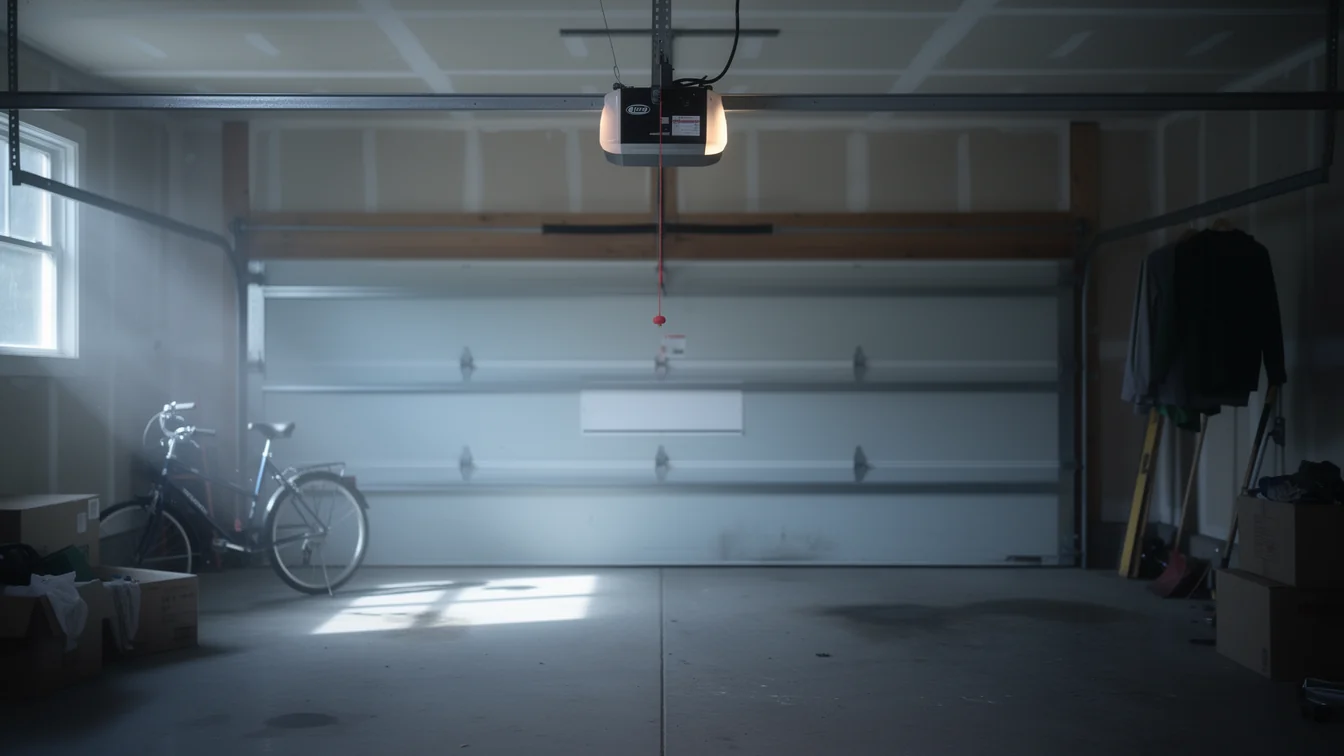
The second mistake is not knowing where the manual release is, or not knowing it exists at all. Every opener has one - a cord with a handle near the top of the door - and it disconnects the carriage from the track so you can lift the door by hand. If you've never located yours, a power outage is the worst time to go looking for it.
The third mistake is replacing an opener without asking about battery backup at all, because the old one never had it and nobody thought to ask for it this time either. That's an easy fix, but only if someone brings it up before the installation, not after the next outage.
What the Weather Here Does to It
Visalia sits in a climate band classified as severe heat, and that heat is directly connected to why power outages happen in the first place. When demand on the grid spikes during the hottest stretches, utilities shed load, and that's when openers go dark. It's not random - it tracks with the heat.
Heat does a second thing to these older units: it stresses the capacitors and solder joints on circuit boards that are already pushing 30-plus years old in homes built around 1980. A board that's marginal in March can fail outright in a heat spike, and it often fails right when the power is also cutting, which makes it look like one problem instead of two. The metal track and hardware on these same-era installs also expand under heat, which can bind the carriage right as the power drops - so you get a door that's hard to move by hand on top of having no power to move it automatically.
What to Look At First
Start with the manual release. Find it, pull it, and confirm the door lifts freely by hand. If it doesn't move smoothly, that's a track or roller problem separate from the power issue, and it's worth sorting out before you touch the opener at all.
Next, check the age of the opener itself. If it matches the house - built sometime in that 1965-2003 range - assume there's no battery backup unless someone's added one since. That's not a flaw in the unit, it's just what was standard when it went in.
Check the breaker too. A tripped breaker on the opener's circuit looks identical to a neighborhood-wide power outage from the garage, and it's a five-minute fix instead of a service call.
One honest limit here: if the board itself has failed from age or heat stress, that's usually not worth repairing piece by piece. Boards for openers this old are hard to source, and a new opener with a battery backup built in costs less than chasing parts for one that's done.
Frequently asked questions
Why does my opener die every time the power goes out, but my neighbor's doesn't?
If your neighbor's house was built later, or they've already replaced their opener, they may have a battery backup built in. A lot of Visalia-area houses from the 1965-2003 building wave never had that feature installed, so the opener simply has no power source once the grid drops.
Is the heat actually causing my opener problems, or is that a coincidence?
It's connected. Visalia falls in a severe-heat climate band, and heat spikes are what strain the grid and trigger power outages in the first place. That same heat also stresses the aging circuit boards in openers from the 1980s-90s housing stock, so a failure during a hot stretch is often two problems showing up at once.
Can I add a battery backup to my old opener instead of replacing it?
Sometimes, but it depends on the model and how old the board already is. If the unit is from that original 1965-2003 build era, the board may not be worth the investment. We'd rather tell you honestly if a new opener is the better money than add a backup to a unit that's close to the end anyway.
Where's the manual release on my garage door?
It's a cord with a red handle hanging from the carriage near the top of the track. Pull it down and toward the motor to disconnect the door from the opener so you can lift it by hand during a power outage.
Related garage door services in Visalia
More garage door guides
Book garage door service in Visalia
Call now or request a quote - tell us what the door is doing and where you are.