
Visalia, CA · Garage Door Service
The Uninsulated Door Problem on Visalia's Older Houses
Most Visalia homes went up between 1965 and 2003, before insulated doors were standard. Here's what that uninsulated panel is doing to your garage in this heat.
- Repairs & new doors
- Springs & openers
- Serving 5 nearby communities
The Situation
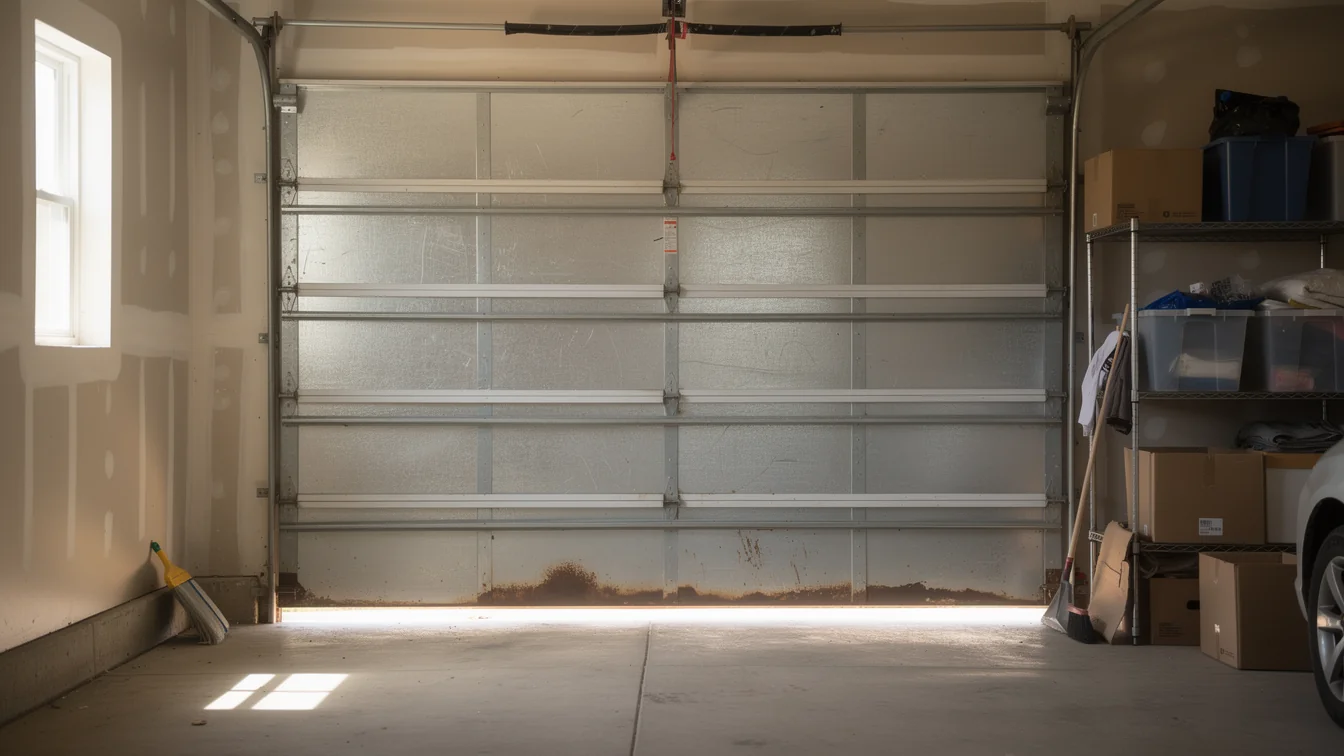
A lot of the garage doors we look at around Visalia went in when the house was built, and most of this housing stock dates from 1965 to 2003, with the median sitting around 1980. That's a long run of construction where a single-layer steel or wood door was just what came with the house. Insulation wasn't a selling point then, and across the 18-odd named areas that make up this service territory, you still see the same pattern: a thin panel, no thermal break, and a slab of metal or wood that's been baking and cooling for decades. Nothing wrong with that door failing to do a job it was never built to do. It wasn't designed against today's expectations, and it wasn't designed for the kind of heat this valley throws at it. The problem isn't that these doors are old and tired, though plenty are. It's that even the ones still working fine were never engineered to manage heat transfer, and in a market with 26,726 owner-occupied houses built in that era, that's not a rare one-off, it's the baseline.
Where People Go Wrong
The common mistake is treating an uninsulated door like a cosmetic problem and fixing it with weatherstripping or a fresh coat of paint. That helps seal gaps, but it doesn't touch the core issue: a hollow steel panel or solid wood slab transfers heat straight through. Owners in this income range, with median household income around $58,350, are often trying to stretch a repair rather than replace, which is reasonable, but a bottom seal or new rollers won't change what the door itself is made of. Another mistake is assuming the garage doesn't matter because it's not conditioned living space. If that garage shares a wall with the house, or has the water heater, laundry, or HVAC equipment in it, the door's thermal performance affects rooms you do care about. We see this a lot in the 1980s and 90s stock that makes up most of the area - the door was never upgraded when the rest of the house got newer windows or insulation, so it's the one weak point left doing the original job from 40 years ago.
What the Weather Here Does to It
This is a severe-heat climate band, and that matters more for garage doors than people expect. Steel panels without insulation absorb heat all day and radiate it back into the garage well after the sun goes down, which is why a garage here can run hotter than the outside air in the evening. That constant heat-cool cycle also works on the door's hardware - track alignment drifts, hinges loosen, and the spring that's sized for a cooler climate works harder than it should because the metal components expand under sustained heat. Wood doors common in the older end of this housing stock dry out and crack along panel seams for the same reason. None of this is dramatic or sudden. It's slow wear from a door material and build quality calibrated for a different asking price point in 1980, not for the summers this part of the valley actually gets. An insulated door with a thermal break handles that cycle differently, which is the actual reason replacement outperforms repair on these older units.
What to Look At First
Start with the door's construction, not its age. Pop the access panel or look at the edge of a section - if it's a single layer of steel or a solid wood slab with no foam core, that's doors on houses built before insulation rules, and it's working against you every summer regardless of how new the opener or springs are. Check the bottom seal next; gaps there let in radiant heat directly. Then look at the panels themselves for warping, especially on south or west-facing garages, which take the worst of the afternoon sun in this heat band. We won't tell you every uninsulated door needs replacing tomorrow - plenty are structurally sound and just need better seals and a garage that's otherwise ventilated. But if the door is original to a house built in the 1965-2003 window and you're also dealing with hardware wearing out faster than it should, that's the point where patching stops making sense and replacing the panel is the better use of the money.
Frequently asked questions
Why does my garage get so much hotter than the rest of the house in summer?
If your door is original to a Visalia-area house from this building era, it's likely uninsulated steel or wood with no thermal break. That material absorbs heat all day and radiates it back into the garage into the evening, which is a bigger factor than most people expect in a severe-heat climate like this one.
Is it worth insulating my existing door instead of replacing it?
Foam insulation kits can help some, especially on steel doors with accessible cavities. But a solid wood slab or a door without room for panels won't gain much. If the door is original to 1965-2003 construction, replacement with a factory-insulated door usually outperforms a retrofit.
How do I know if my door predates insulation standards?
Check the edge of a panel for a visible core. A single sheet of steel or solid wood with nothing inside means it was built before insulated doors were standard in this market, which lines up with most houses here built between 1965 and 2003.
Does the heat actually damage the door hardware, not just the panel?
Yes. Sustained heat cycling loosens hinges, shifts track alignment, and makes springs work harder than they're sized for. It's gradual, not a single failure point, but it's a real cost of an uninsulated door sitting in a severe-heat climate for decades.
Related garage door services in Visalia
More garage door guides
Book garage door service in Visalia
Call now or request a quote - tell us what the door is doing and where you are.